Ambient Intelligence
Ambient/zero-UI/implicit interface, smart home, adaptive systems, presence detection
- Definition
- An ambient interface (also known as zero-UI or implicit interface) is a system that responds to context, sensors, and environmental cues without requiring explicit user commands. The interface is embedded in the environment itself, and interaction is often passive, anticipatory, or background rather than initiated through deliberate actions.
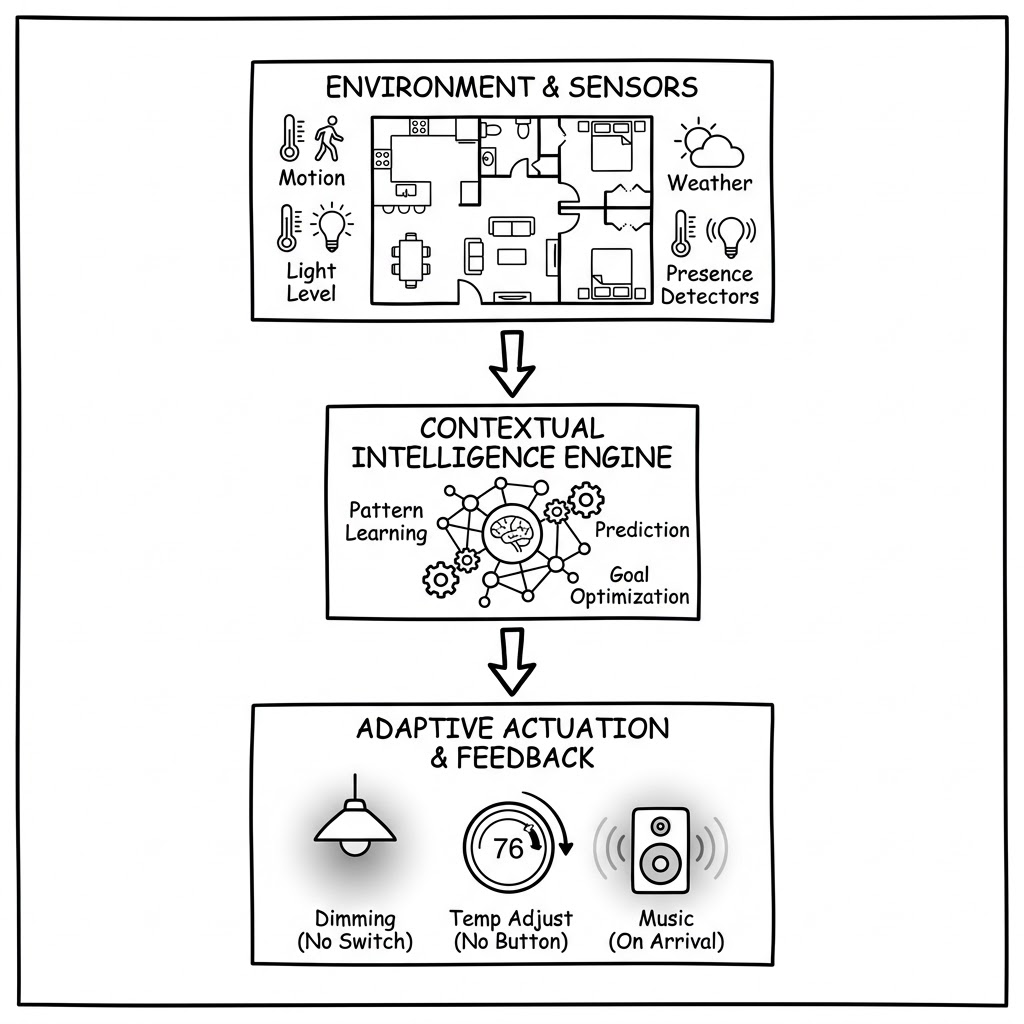
Ambient interfaces create seamless interactions by leveraging environmental data, user presence, biometrics, and contextual awareness. Instead of requiring users to interact with screens or devices directly, the environment responds intelligently to users' needs, behaviors, and situational context.
These systems operate in the background, adapting to user preferences and environmental conditions without demanding conscious attention. Interaction happens through natural behaviors, gestures, voice, presence, or physiological signals interpreted by sensor networks and AI systems.
Examples
- Smart home systems that adjust lighting, temperature, and music based on occupancy, time of day, and user preferences detected through sensors.
- Adaptive office environments that change desk height, lighting, and ventilation based on employee presence and biometric feedback.
- Retail stores that automatically recognize loyalty members and personalize displays, pricing, or product recommendations as they walk through aisles.
- Automotive systems that adjust seat position, mirror angles, and climate control based on driver detection and authentication.
- Healthcare monitoring systems that detect falls, vital sign changes, or medication adherence through environmental sensors without wearable devices.
When should you use it?
- When reducing cognitive load and minimizing explicit interactions improves user experience and safety.
- For creating seamless, Calm Technology interactions that respect user attention and environmental context.
- In assistive living and healthcare contexts where users may have limited ability to operate traditional interfaces.
- When environmental awareness and contextual adaptation provide better outcomes than explicit command-based interactions.
- For creating immersive experiences where the technology disappears into the background.
How does it work?
Ambient interface systems typically consist of: sensor networks (environmental, biometric, motion), context processing engines (AI/ML for pattern recognition), adaptation mechanisms (rules-based or learning systems), actuators/affordances (ways the environment can respond), and feedback loops for continuous improvement. The system maintains a model of the user, environment, and their relationship, constantly updating this model based on sensor input and triggering appropriate environmental responses.